Category: Towers & Foundations
-
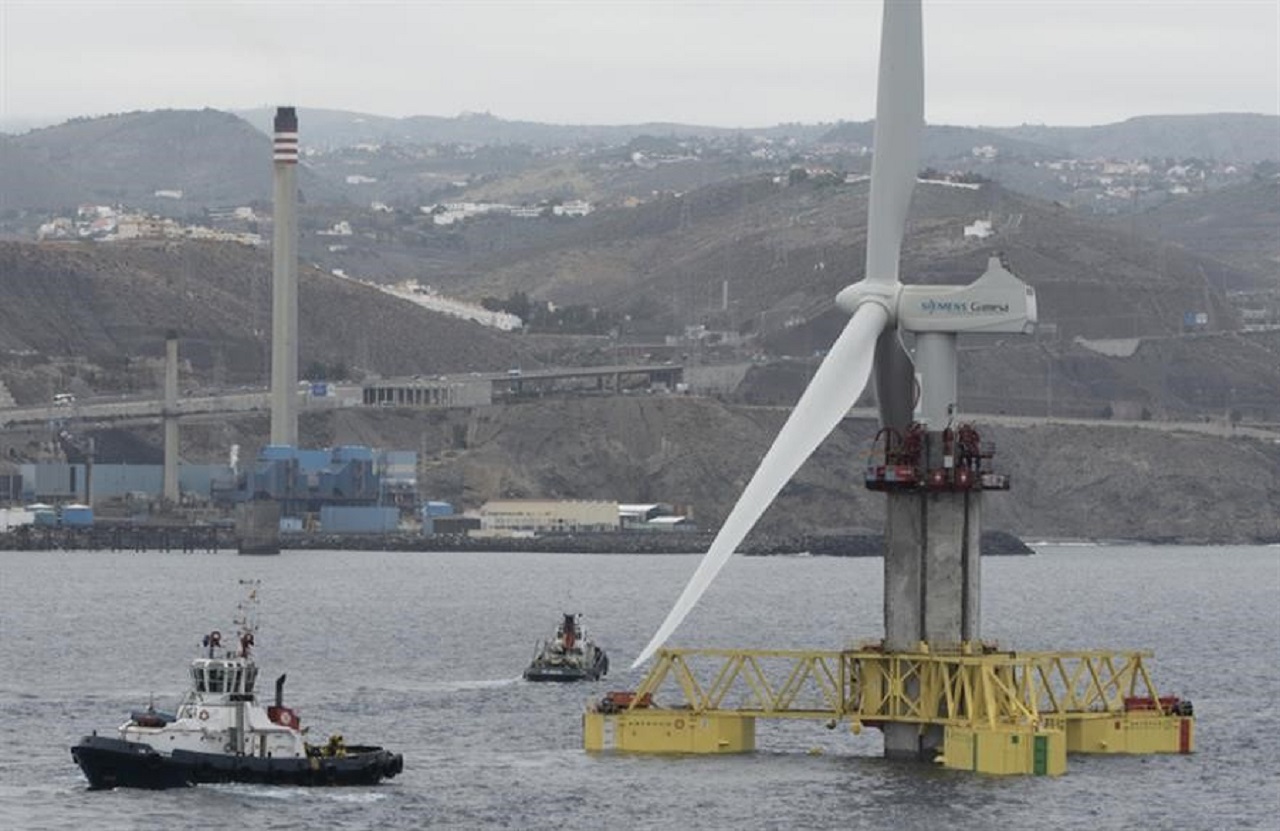
Self-erecting turbines: the Elisa / Elican project
The Elisa / Elican Project is a multimillion, full-scale prototype of a self-erecting offshore concrete tower. The tower is coupled with a buoyant foundation – it floats and can be transported to the installation site where it is ballasted and sunken to the final position. Once in place the tower self-erection can start, saving money…
-
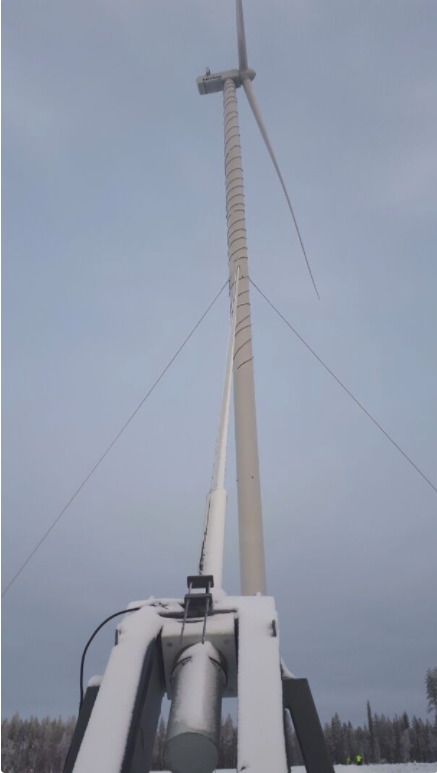
Cable stayed wind turbines towers
The use of cable stayed wind turbine towers is somehow unusual. They are however relevant when very high steel towers are used (from 100+ meters to the current record, 175m). An example can be seen in the picture below. They have been taken by Peikko, a Finnish company in charge of the design and construction…
-
Gap or no gap? The new IEC61400-6
How to optimize the design of WTG foundations? As wind turbine loads and foundations size keep increasing year after year sharpening the geotechnical calculations and modelling correctly the interaction between soil and foundation is becoming a priority. The cost of foundations can represent a significant percentage of the investment in a new wind farm –…
-
Anchor cage design standard assumptions: is there room for optimization?
Since some years ago almost all wind turbine manufacturers (“OEM” – I hate acronyms) have modified their tower to foundation interface. The previous technical solution to connect tower and foundation was based on an embedded steel section (like a “ring” inside the foundation). It did not work properly and the issues caused by this element…
-
Nearshore wind turbines foundations
Nearshore (or “intertidal”) foundations are not a usual type of foundations. It is a hybrid solution, an on-shore foundation in a quasi-offshore environment. I have heard about this type of foundations several times in my career. The first time it was a preliminary design that I have made about 10 years ago for a Chinese…
-
IEC 61400-6:2020 Tower and foundation design requirements: a new Design Code is in town!
The IEC (acronym of International Electrotechnical Commission) has just released a new design code. More precisely it is a new section of an existing code, the IEC61400. The IEC is an international organization that prepares and publishes international standards for all electrical, electronic and related technologies, including energy production and distribution devices. The IEC 61400…
-
Nabrawind Transition Foundation
Some days ago I have been contacted by Miguel, Sales And Marketing Manager at Nabrawind. Nabrawind is a Spanish company working at several interesting breakthrough concepts – including a modular blade that I will try to describe in another article in the future, a self erecting tower and the innovative “Transition Foundation”. Miguel asked me if…
-
Lift me up: the braced foundation
The braced foundation is a partially precast foundation that lift the wind turbine some additional meters above the ground. Developed and patented by Esteyco (a Spanish engineering firm) is a technical solution validated, certified and used in several wind farms worldwide. This solution increase the hub height up to 5 meters, which usually results in…
-
Non linear finite element design on wind turbine foundations
The design of wind turbine foundations is currently based on the plate theory. “Plates” are plane structural element and the theory (or “theories” – there are at least two currently used) calculate stress and deformation when the structure is loaded. During the analysis several difficulties emerges in satisfying equilibrium, stress-strain relations, compatibility of strains and…
-
Once More, with Feeling: Timber Towers
Approximately one year ago I wrote a post about a full scale prototype of a wind turbine tower made of wood. It has been built in 2012, but after that the idea seemed to have stalled without progress: one of the companies involved in the construction, TimberTower GmbH, disappeared from the radar shutting down their website and…