I already discussed in another post a frequent problem of with turbines foundation, the appearance of cracks.
In general, my impression is that the new foundations with anchor cages are much more reliable that the previous technical solution (the “embedded ring” – the industry standard some years ago).
However, every now and then I still hear story of foundations that need some kind of intervention due to mistakes during design and/or execution.
Unfortunately there is a lot of secrecy on this issues. Unlike other civil engineering products (e.g. roads, dams, etc.) problems with wind turbines foundations are generally hidden, probably due to the fact that they are mainly private investments and probably the companies experiencing an expensive problem prefer to have as little publicity as possible.
From several studies I’ve been able to found on the topic it seems that towers and foundations are accountable for less than 5% of WTG failures – being blades, gearbox and generator much more frequent sources of problems.
However, while replacing a blade or a gearbox is “business as usual”, replacing a foundation is not really an option – and any intervention will probably be quite expensive.
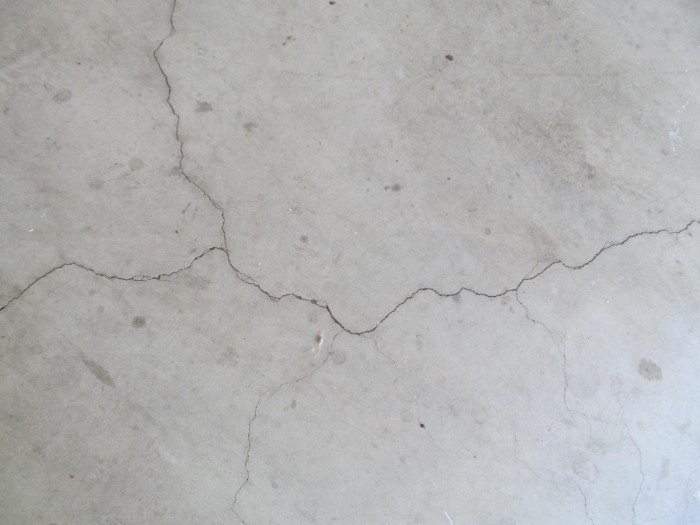
Problems in the foundations usually materialize as cracks in the concrete.
In many cases they are caused by the cyclical nature of foundation loads – with a lifespan of 20 to 25 years the foundation can be exposed to millions of loads cycles.
These cracks can be radial or circumferential, and appear both in the pedestal (the visible part of the foundation, where the tower connect to the foundation) and in the buried part of the foundation.
Usually these cracks tend to appear soon (1 or 2 years) and they doesn’t pose a danger to the stability of the wind turbine. However, water could infiltrate them damaging the reinforcement bars.
The position of cracks can be defined with ultrasonic devices.
These technology use the echo of sonic waves to create tridimensional images of the foundation. In practice a crack will appear as a discontinuity, reflecting the wave to the receiver.
Should cracks on a foundation worry you?
It depends.
It’s important to note that not all cracks are created the same: shrinkage cracks or cracks in the grouting due to an excess of material are usually less critical than the appearance of voids (for instance below the load spreading plate or the bottom flange of the anchor cage).

Leave a Reply